
A magnesium fire starter is a small, compact and very useful piece of outdoor gear. It can produce powerful sparks even when a regular lighter or matches are not available. The fire starter alone is not enough, however. Successfully starting a fire also depends on choosing the right tinder, a fire-starting material that catches a spark easily.
Choose a fire starter for your survival kit
This article is based on an older scout test carried out at a camp run by the Javor Klatovy scout centre. The Beaver patrol tested magnesium fire starters in practice and compared different materials that could be used as tinder. The result is a practical and slightly adventurous test showing that starting a fire with a fire starter is not just about producing sparks. Preparing the material properly and being patient are just as important.
What is tinder and why is it so important when using a fire starter?
Tinder is a fine fire-starting material that can catch a spark from a fire starter and begin to burn or at least smoulder. It is then used to ignite small twigs, wood shavings, dry grass or other kindling.
The test showed that magnesium fire starters work very well and produce plenty of hot sparks. Not everyone managed to create sparks effectively on the first attempt, however. It takes some practice, the right movement and properly prepared material. In the end, every member of the team managed it, including the younger participants.
Which materials did the Beavers test?
The patrol first held a brainstorming session and suggested various materials that might work as tinder. During the morning, they collected or prepared the materials and tested which ones caught a spark most easily.
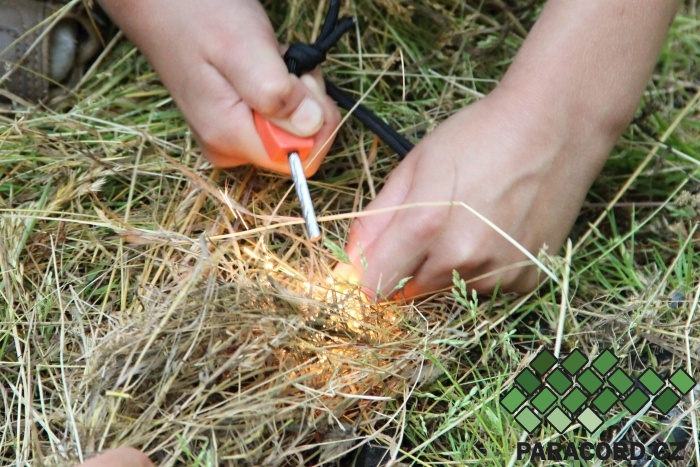
The test included birch bark, dry grass, dry rotten wood, dry moss, paper tissues, white writing paper, old newspapers, a feminine hygiene tampon, solid firelighter, human hair, inner paracord fibres, dry wood shavings and hemp twine.
The Beavers also wanted to test the fluffy fibres of cottongrass, which grows in areas such as the Šumava region. Because it is a protected plant, however, they correctly decided not to collect it.
Tinder test results
The following table shows the observed properties of the individual materials when tested with a magnesium fire starter.

Which materials were easiest to ignite?
The materials that the Beavers repeatedly managed to ignite and recommended as the most practical were:
- birch bark,
- paper tissues,
- a feminine hygiene tampon,
- hemp twine,
- solid firelighter.
The test showed that a fire starter alone is not enough. Properly prepared tinder makes the biggest difference. It should be fine, dry, fluffed up and protected from moisture.
Can paracord be used as tinder?
Paracord can be used as tinder in an emergency, but it is not the easiest option. During the test, the Beavers were unable to ignite the paracord, although we know that experienced users can do it. In practice, there are other materials that catch more easily and work more reliably.
If you want to carry a cord specifically designed to also help with emergency fire starting, Flame cord makes more sense. It has a special flammable core that can be pulled out, separated, fluffed up and used as fire-starting material.
Classic Paracord 550 is primarily an excellent all-purpose cord for tying, repairs, bracelets and outdoor use. Flame cord, on the other hand, is an interesting choice for anyone who wants to add emergency fire-starting material to their survival gear.
What did the Beavers learn from the test?
- A magnesium fire starter is a practical addition to an emergency kit. It is small, lightweight and produces plenty of sparks when used correctly.
- Using a fire starter takes practice. A smooth movement along as much of the fire starter as possible and a little patience both help.
- The choice of tinder makes a big difference. Without good fire-starting material, getting a fire going can be unnecessarily difficult.
- The feminine hygiene tampon was a surprise. Once torn apart and fluffed up, it worked very well as emergency tinder.
- Damp material needs to be dried. If something is only slightly damp, placing it in a pocket may help dry it using body heat and movement.
- Starting a fire with a fire starter is not the easiest method. Once you learn how to do it, however, it is a valuable outdoor skill.
Or, as they put it: “Don’t be IN, be OUT. Don’t be skin, be a SCOUT.” :-)
What should you carry in an emergency or survival kit?
If you want to prepare similar equipment, a small fire starter for a survival bracelet is a useful option, as is a survival side-release buckle with a fire starter and compass. It is also useful to carry a small amount of proven tinder, such as birch bark, a tampon, a tissue or hemp twine, stored somewhere dry.
You can also add Flame cord to your paracord gear. It combines the advantages of cord with emergency fire-starting material. For general crafts, bracelets and versatile outdoor use, Paracord 550 Type III remains a reliable classic.
Photos from the test
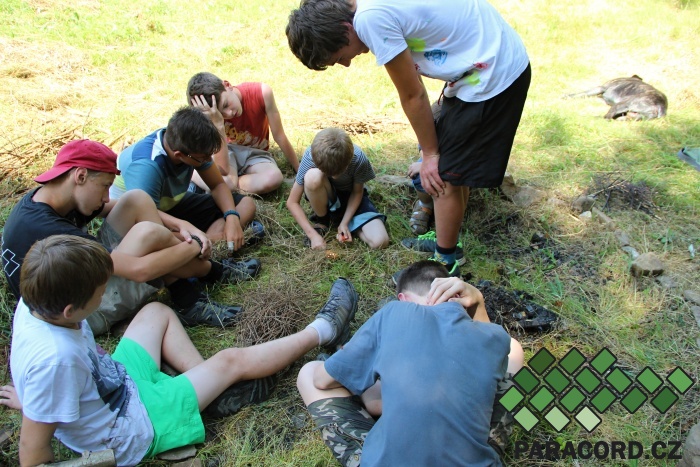
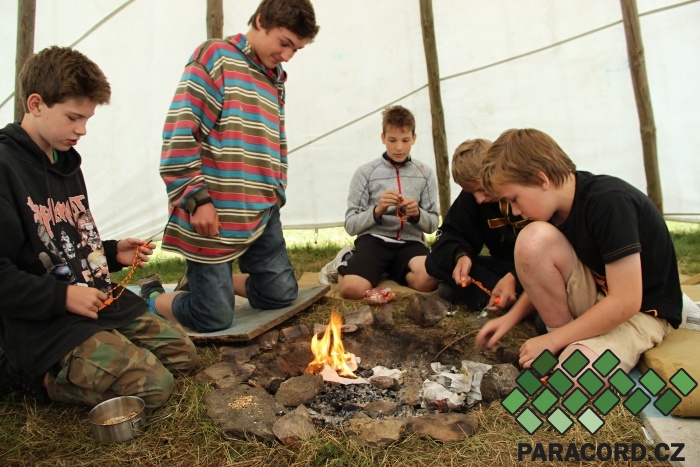
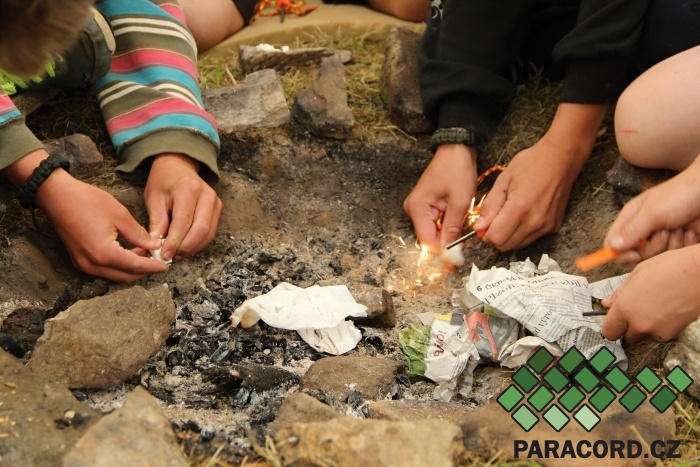
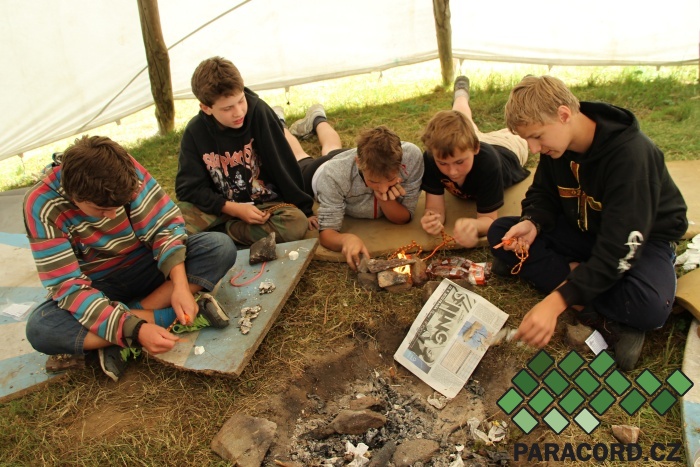
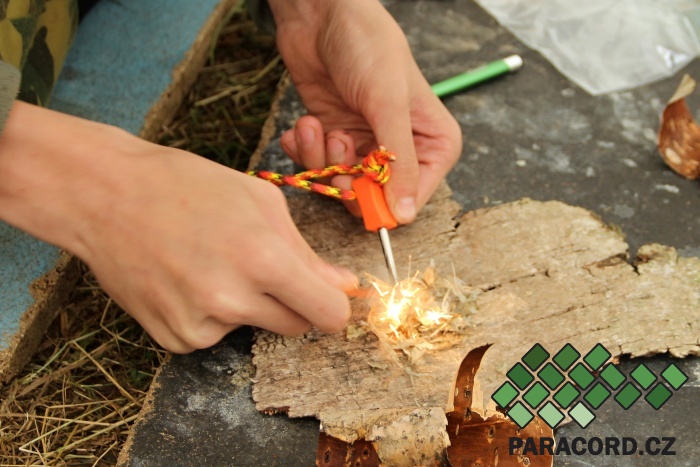
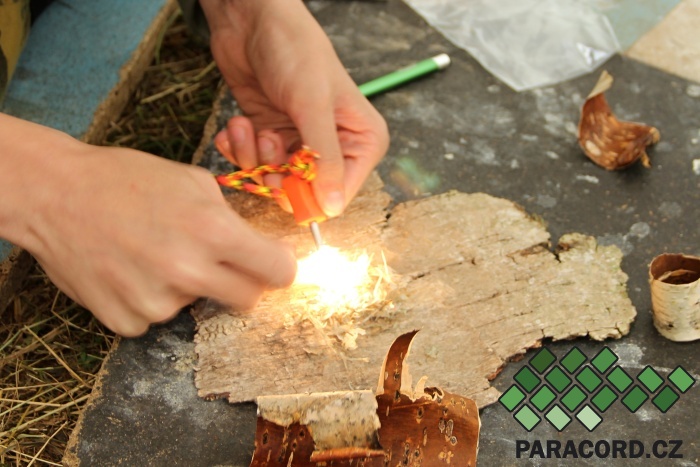
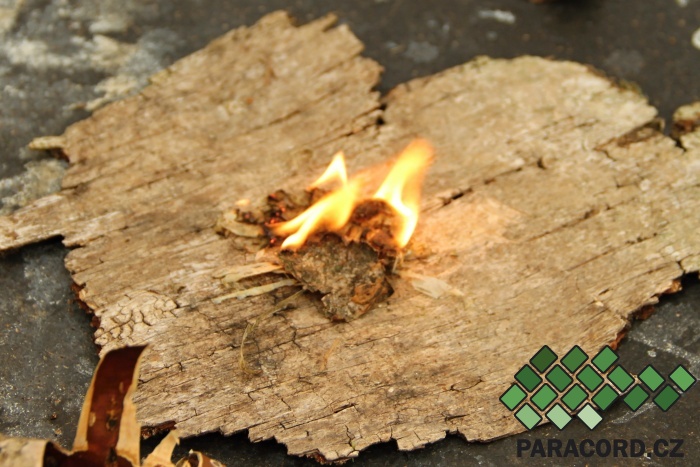
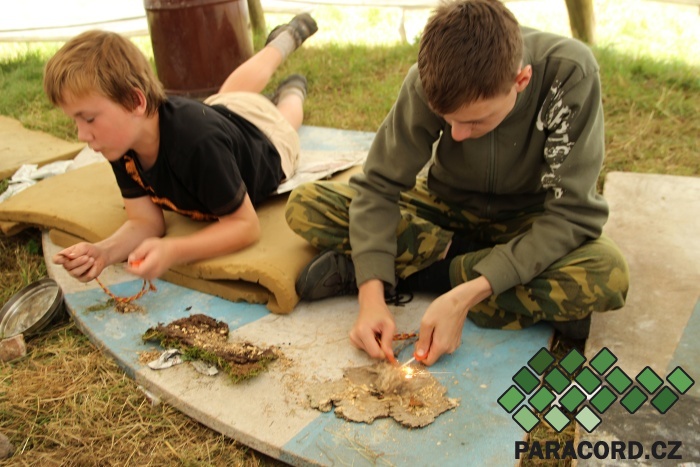
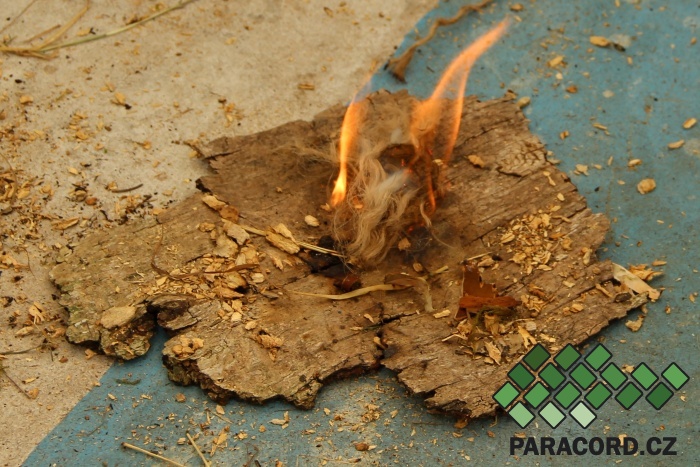
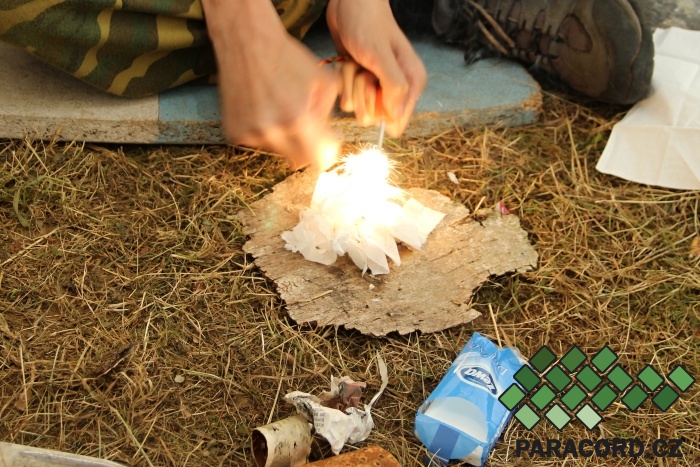
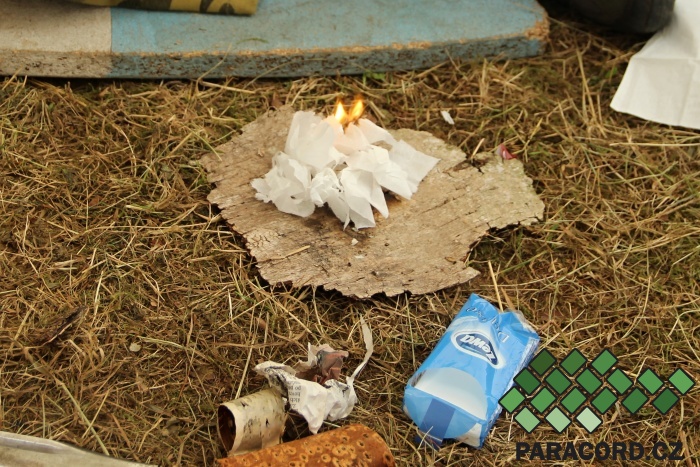
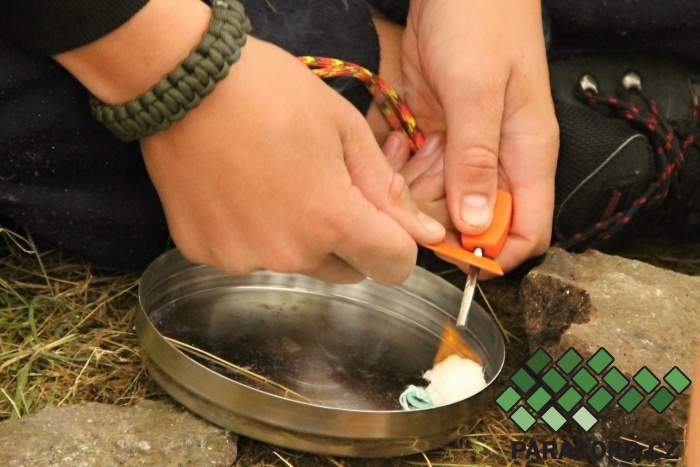
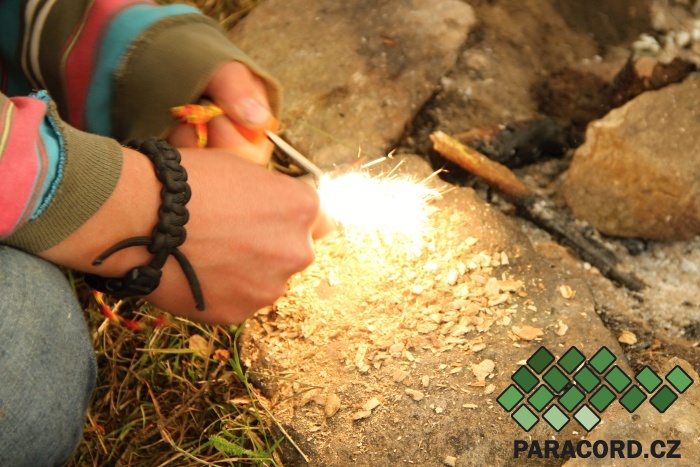
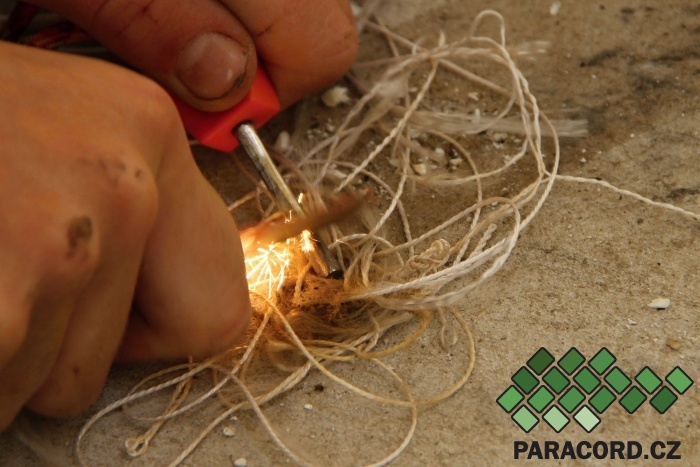
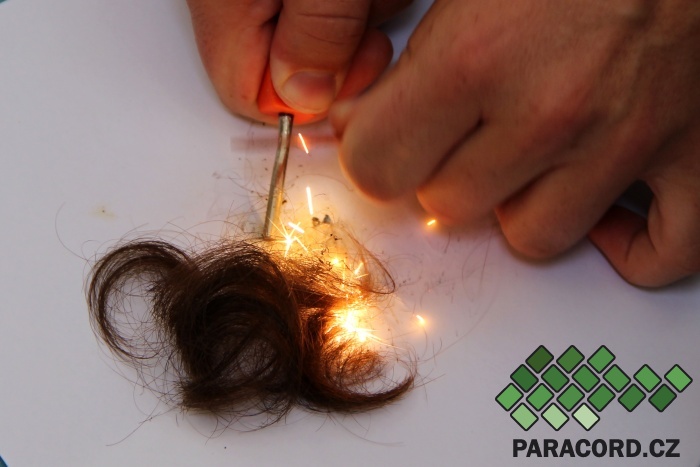
The following photographs were taken during the Beaver patrol's testing. They show the participants using fire starters, comparing different tinder materials and testing a variety of natural and commonly available materials.
Birch bark as tinder
Hemp twine as tinder
Paper tissue as tinder
Other materials tested
Article written and photographs provided by Wlčice.
Testing was carried out by the Beaver patrol of the Javor Klatovy scout centre.
Special thanks: thank you to Kulda, who sacrificed his hair.
Edited and updated for PARACORD.CZ.