
What is paracord?
Paracord is a strong, lightweight and versatile nylon cord, also known as parachute cord. You may have heard children talking about it at school, camp or scouts, or seen it used for bracelets, keychains, dog leashes, collars or outdoor gear. Most often, the term refers to Paracord 550, an approximately 4mm cord with a strong braided sheath and an inner core.
The name paracord comes from the English term parachute cord. It was originally used for parachutes and paratrooper equipment, but today it is popular mainly as a practical material for outdoor activities, survival, scouting, crafts, and making bracelets, keychains, dog leashes, collars and many other handmade projects.
If you have just asked yourself “what exactly is paracord?”, you are in the right place. This article provides a simple explanation of where paracord comes from, how it is constructed, why Paracord 550 is the best-known type and what paracord is used for today.
- Paracord means parachute cord.
- It is also commonly referred to simply as parachute cord.
- Paracord 550 is the best-known and most widely used type of paracord.
- It has a diameter of approximately 4 mm and a tensile strength of around 250 kg (550 lb).
- It consists of a strong braided sheath and an inner core.
- It is used for crafts, outdoor activities, camping, survival, scouting, dog leashes, collars, bracelets, keychains and practical repairs.
- It is not a climbing rope and must not be used for personal fall protection.
Why is paracord called parachute cord?
Paracord originated as parachute cord. Its use expanded significantly during the Second World War, when paratroopers and soldiers used it as part of parachute and field equipment.
Paratroopers quickly realised that the cord was useful for much more than parachutes. After landing, they could use it to repair equipment, secure gear, fasten small items, build shelters, attach camouflage nets or make emergency repairs in the field.
Thanks to its strength, low weight and compact size, paracord gradually spread beyond military use. Today it is used by campers, scouts, bushcrafters, dog owners, crafters, handmade enthusiasts and anyone who wants to keep a reliable, versatile cord close at hand.
Paracord in practice: what is it used for?
Paracord can be used anywhere you need to tie, secure, attach, repair or decorate something. It is strong, easy to work with, can be braided into a wide range of patterns and is available in many colour combinations.
- Creative crafts: bracelets, keychains, jewellery, decorations, handle wraps and decorative projects.
- For dogs and other animals: dog leashes, collars, tracking lines, collar accessories, halters and strong accessories.
- Outdoor and camping: securing a tarp, repairing gear, hanging lighter items and tying equipment together.
- Scouting and camps: practical craft projects, camp activities, knot tying and useful backpack gear.
- Survival and emergency use: repairs, tying, improvised attachment points, auxiliary cords and emergency loops.
- Home use: organising items, hanging, fastening and simple repairs.
- Practical accessories: shoelaces, belts, straps, wraps, whips and other handmade products.
In military and outdoor use, paracord can be used to secure equipment to backpacks, fasten luggage, tie down small items, build shelters, repair gear or handle other supporting tasks in the field. In the craft world, it is particularly popular for its wide range of colours and the ability to create strong, practical and attractive products.
Paracord 550: the best-known classic
When people talk about paracord, they usually mean Paracord 550 Type III. It is the most widely used version because it offers a good balance of strength, thickness and ease of handling when braiding.
Paracord 550 has a diameter of approximately 4 mm and a tensile strength of around 250 kg (550 lb). The number 550 refers to its tensile strength in pounds. This makes Paracord 550 strong enough for general outdoor, craft and practical use while still being thin and comfortable enough for making bracelets, keychains, dog leashes or collars.
This does not mean that paracord should routinely be loaded up to this limit. Tensile strength is a technical specification, not a recommended safe working load. We explain this in more detail in the article Load capacity, elongation and tensile strength.

What is paracord made of?
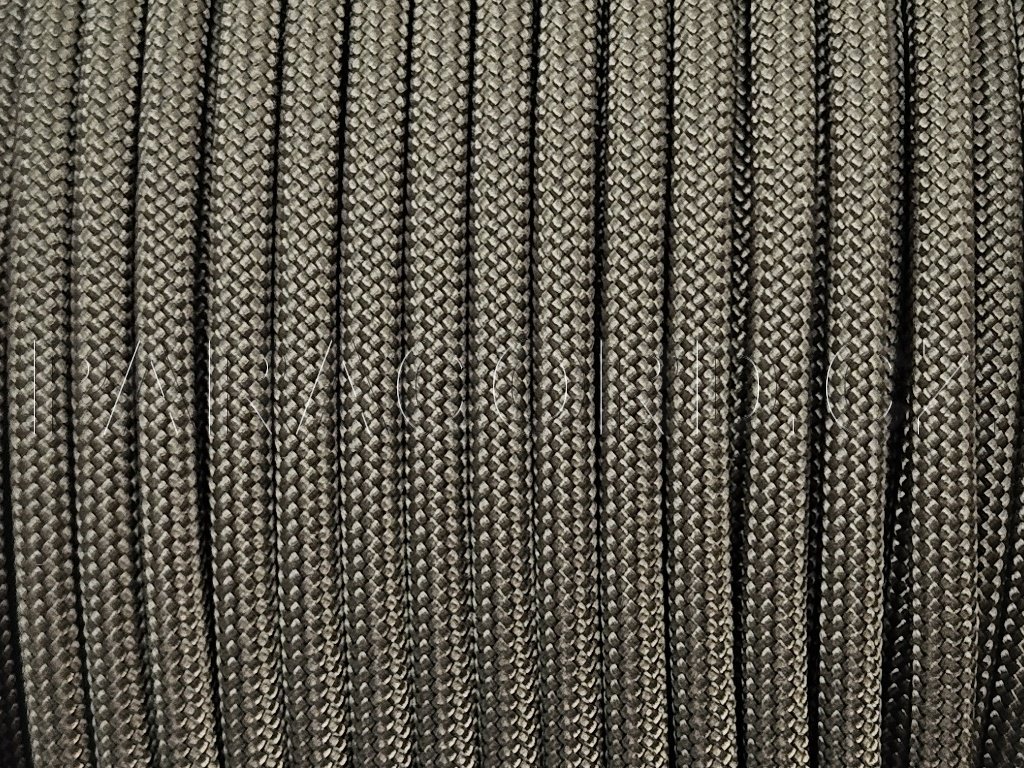
Paracord consists of two main parts: an outer braided sheath and an inner core. The outer sheath protects the cord, helps it retain its shape and determines its colour. The inner core gives the cord its strength.
Classic Paracord 550 usually has a core made up of 7 inner strands. The sheath is braided from a larger number of strands, often 32 or 36. This construction makes paracord strong, flexible, compact and comfortable to work with.
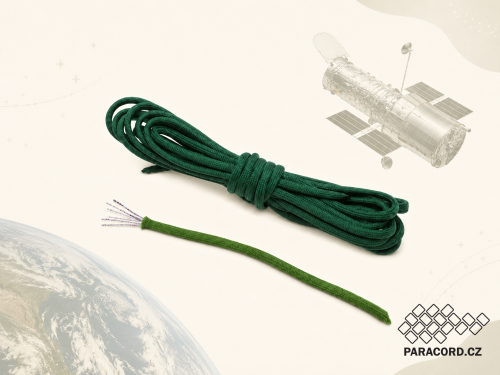
In some situations, paracord can be taken apart and its individual components used separately. The inner yarns may be useful in an emergency for sewing, repairing gear, finer tying tasks or fishing. The coloured outer sheath can also be used for creative projects.
Basic specifications of Paracord 550
Paracord 550 is one of the most popular types because it is so versatile. It is neither too thin nor unnecessarily thick. It is suitable for beginners, advanced crafts and practical outdoor use.
| Specification | Paracord 550 Type III |
|---|---|
| Diameter | approx. 4 mm |
| Tensile strength | approx. 250 kg (550 lb) |
| Material | usually nylon / polyamide |
| Core | usually 7 inner strands |
| Braided sheath | 32 or 36 strands depending on the specific version |
| Elongation | the original paracord specification states min. 30 % |
| Weight | the original specification states max. 6.61 g/m |
| Typical use | bracelets, keychains, dog leashes, collars, outdoor activities, camping, crafts, repairs |
Quality Paracord 550 Type III is based on the original military specification MIL-C-5040H. However, always check the individual product details, material, origin, technical specifications and any certifications. Different manufacturers may vary in construction, material, workmanship and cord properties.
How is paracord sold?
Paracord 550 is sold in various lengths and pack sizes depending on how you plan to use it. Shorter packs are sufficient for small projects, while larger spools are more suitable for frequent crafting, camps, or making dog leashes and collars.
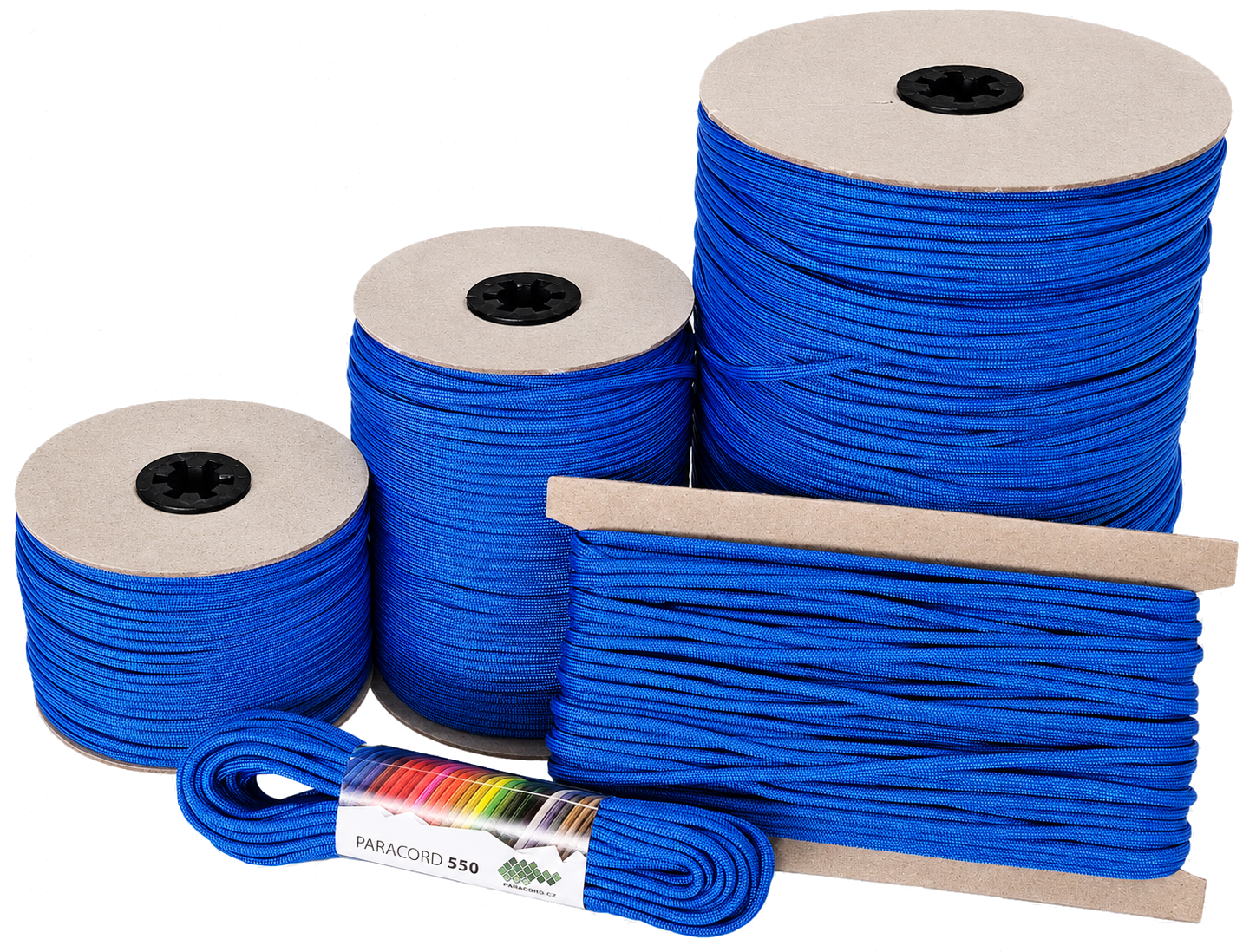
- Paracord 550 cut length – suitable when you need an exact length or want to combine several colours.
- Paracord 550 10 m bundles – a practical pack size for beginners, children, schools, clubs and craft projects.
- Paracord 550 25 m cards – a versatile quantity for bracelets, keychains, small workshops and regular crafting.
- Paracord 550 50 m spools – a good choice for larger projects, dog leashes, collars, workshops and small-scale production.
- Paracord 550 100 m spools – better-value packaging for regular crafting, scout groups, camps and making multiple items.
- Paracord 550 300 m spools – the largest pack size for major projects, larger-scale production and further processing.
What can you make from paracord?
Paracord has become a popular material mainly because it is practical and also looks good. It can be used purely for functional purposes or as a bold decorative element.
- Paracord bracelets – popular survival, outdoor and fashion accessories.
- Paracord keychains – for keys, knives, backpacks, torches or zips.
- Dog leashes and collars – strong, colourful and distinctive accessories for dogs.
- Paracord craft kits – ready-made kits for children, camps, schools, clubs and beginners.
- Paracord belts – some types of belts can contain several dozen metres of braided cord.
- Shoelaces, wraps, straps and halters – practical projects for the home, animals and outdoor use.
- Scout and camp projects – bracelets, keychains, knot tying and simple practical projects.
You can find more inspiration in our Tutorials section, which includes specific step-by-step instructions.
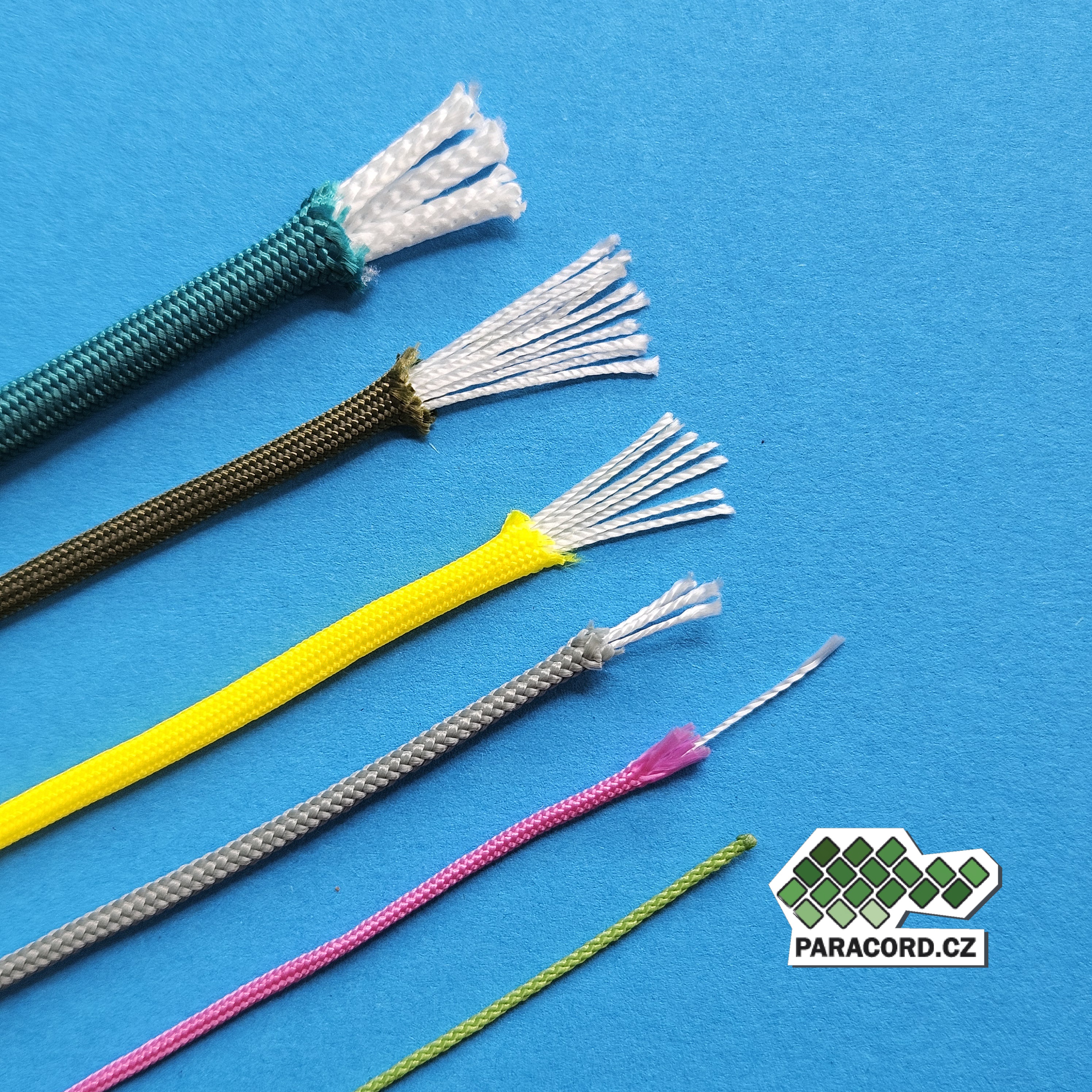
Are there other types of paracord?
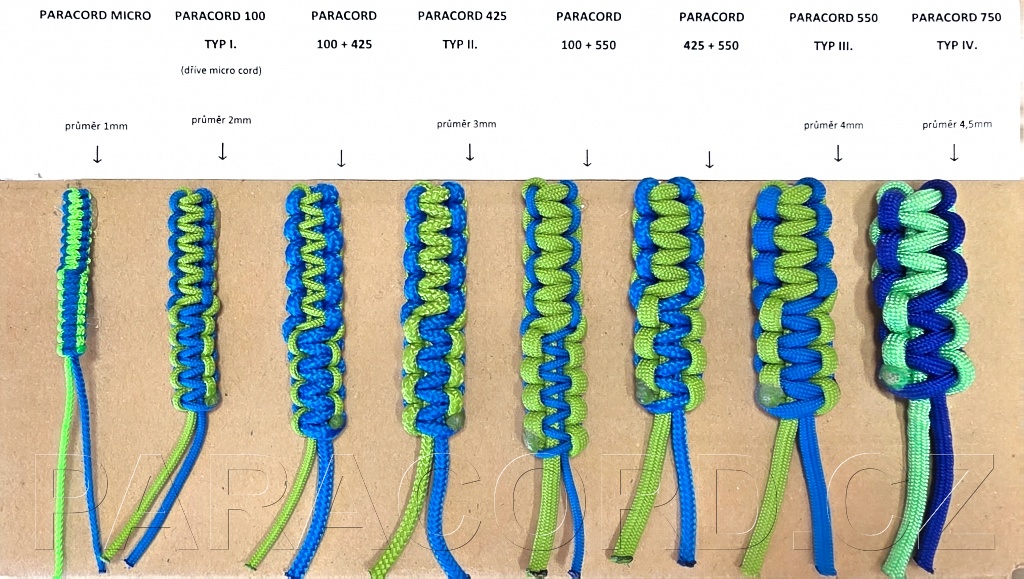
Yes. Paracord 550 is the classic choice, but there are also other types and diameters. Some are thinner and suitable for fine details, while others are thicker and better suited to more robust projects.
- Paracord Micro – a very thin cord for details, stitching and fine decorative work.
- Paracord 100 Type I – a thinner version for keychains, finer bracelets and small projects.
- Paracord 425 Type II – an intermediate option between thin paracord and classic 550.
- Paracord 550 Type III – the most widely used all-purpose version.
- Paracord 750 Type IV – a thicker cord for more robust applications.
- Paracord Max – a strong cord suitable for larger projects, dog leashes and heavier wraps.
- Glow cord – cord that glows in the dark after exposure to light.
- Flame cord – a special version with a flammable core for emergency fire starting.
You can find a detailed overview in the article Differences between paracord types.
What should paracord not be used for?
Paracord is a versatile utility cord, but it is not designed for every application. Do not use it for personal fall protection, climbing, abseiling, working at height, rescue systems or suspending heavy loads above people.
For these purposes, always use certified ropes and equipment designed for the specific application. Paracord is an excellent choice for crafts, outdoor activities, camping and practical repairs, but it is not a substitute for safety rope.
Frequently asked questions about paracord
What is paracord?
Paracord is a strong nylon cord also known as parachute cord. It was originally used with parachutes, but today it is mainly used for outdoor activities, crafts, camping, survival, bracelets, keychains, dog leashes, collars and practical repairs.
What does Paracord 550 mean?
Paracord 550 is the best-known type of paracord. The number 550 refers to its tensile strength of 550 lb, approximately 250 kg. It has a diameter of around 4 mm and is suitable for most general projects.
Is paracord the same as parachute cord?
Yes. In everyday use, paracord is commonly referred to as parachute cord. The name comes from the original English term parachute cord.
What is paracord made from?
Quality paracord is most commonly made from nylon, also known as polyamide. It consists of an outer braided sheath and an inner core. Paracord 550 usually contains 7 inner strands.
What is paracord used for?
Paracord is used for bracelets, keychains, dog leashes, collars, wraps, camp projects, outdoor accessories, camping, survival, tying, fastening and small equipment repairs.
Is paracord suitable for children?
Yes. Paracord is a very popular craft material for children, scout groups, schools, clubs and camps. Paracord 550 is particularly suitable for beginners because it is easy to hold, easy to braid and available in many colours.
Is paracord suitable for dog leashes and collars?
Yes. Paracord is commonly used to make dog leashes and collars. However, the paracord itself is not the only important factor. Quality carabiners, rings, buckles and secure finishing are also essential.
Is paracord a climbing rope?
No. Paracord is not a climbing, rescue or safety rope. It must not be used for personal fall protection, abseiling, working at height or fall-arrest situations.
Summary
Paracord is a versatile parachute cord that has made its way from paratroopers to scouts, campers, crafters, dog owners and anyone who appreciates practical gear. The best-known version is Paracord 550, a strong 4mm cord with a braided sheath and inner core.
It is suitable for crafts, bracelets, keychains, dog leashes, collars, repairs, camping, survival and general use at home or outdoors. If you are just getting started, Paracord 550 is the most versatile choice.